
Jewel Kristine (Kristy) Hemmele
LCPCIllinois · 28 yrs exp
Compassionate counselor blending values and practical tools
Stress, Anxiety · Relationship · Grief · Self esteem · +8 more
Read profileTherapists in the United States, the United Kingdom and Australia
Need to talk to someone now?Therapist listings are provided by BetterHelp. We will earn a commission at no extra cost to you if you use our links to buy.
Use these profiles to compare therapists who list Divorce as a focus alongside work with loneliness and connection. Browse listed profiles to evaluate approaches, credentials, listed location and languages.
Illinois · 28 yrs exp
Compassionate counselor blending values and practical tools
Stress, Anxiety · Relationship · Grief · Self esteem · +8 more
Read profile
Louisiana · 15 yrs exp
Compassionate counselor for life transitions
Stress, Anxiety · Trauma and abuse · Grief · Self esteem · +1 more
Read profile
Texas · 10 yrs exp
Compassionate, practical support for life changes
Stress, Anxiety · Grief · Depression · Coping with life changes
Read profile
Texas · 3 yrs exp
Counselor blending language and behavior work
Stress, Anxiety · Addictions · Relationship · Family · +5 more
Read profile
Florida · 20 yrs exp
Practical therapy for stress and relationships
Stress, Anxiety · Trauma and abuse · Anger · Self esteem · +1 more
Read profile
Nevada · 25 yrs exp
Experienced therapist focused on relationships and connection
Stress, Anxiety · Relationship · Family · Trauma and abuse · +1 more
Read profile
Illinois · 39 yrs exp
Supportive LCSW focused on everyday coping
Stress, Anxiety · Relationship · Grief · Sleeping · +1 more
Read profile
Massachusetts · 30 yrs exp
Thirty years helping people find connection
Stress, Anxiety · Addictions · Relationship · Trauma and abuse · +1 more
Read profile
Ohio · 25 yrs exp
Experienced counselor for practical change
Stress, Anxiety · Relationship · Self esteem · Depression · +1 more
Read profile
Michigan · 20 yrs exp
Compassionate social worker for adults
Stress, Anxiety · Trauma and abuse · Grief · Depression · +1 more
Read profile
South Dakota · 8 yrs exp
Practical support for stress and life change
Stress, Anxiety · Relationship · Trauma and abuse · Career · +1 more
Read profile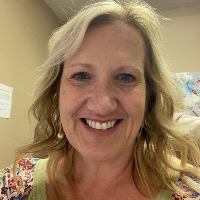
Kentucky · 9 yrs exp
Practical, goal-focused therapy with clear steps
Stress, Anxiety · Relationship · Self esteem · Depression · +6 more
Read profile
Michigan · 35 yrs exp
Compassionate social worker with practical tools
Stress, Anxiety · Addictions · LGBT · Relationship · +11 more
Read profile
North Dakota · 31 yrs exp
Compassionate LCSW with decades of experience
Stress, Anxiety · Relationship · Trauma and abuse · Grief · +1 more
Read profile
United Kingdom · 4 yrs exp
Therapeutic counselling for belonging and change
Stress, Anxiety · Family · Self esteem · Depression · +11 more
Read profile
United Kingdom · 15 yrs exp
Kind, client-centred counselling for life changes
Stress, Anxiety · Relationship · Trauma and abuse · Depression · +1 more
Read profile
United Kingdom · 15 yrs exp
A warm, person-centred counsellor
Stress, Anxiety · Relationship · Family · Grief · +9 more
Read profile
United Kingdom · 11 yrs exp
A person-centred counsellor for people feeling stuck
Stress, Anxiety · Grief · Self esteem · Depression · +8 more
Read profile
United Kingdom · 14 yrs exp
Existential counsellor helping people reconnect
Stress, Anxiety · Trauma and abuse · Grief · Eating · +14 more
Read profile
Florida · 25 yrs exp
Experienced counselor for life transitions
Stress, Anxiety · Addictions · Relationship · Depression · +1 more
Read profile
United Kingdom · 3 yrs exp
Understanding, practical, client-led counselling
Relationship · Family · Grief · Self esteem · +1 more
Read profile
New Jersey · 25 yrs exp
Calm, practical support for life changes
Relationship · Trauma and abuse · Self esteem · Depression · +1 more
Read profile
United Kingdom · 7 yrs exp
Supportive counsellor helping people through life changes
Stress, Anxiety · Trauma and abuse · Grief · Self esteem · +1 more
Read profile
United Kingdom · 3 yrs exp
Experienced psychotherapeutic counsellor for life transitions
Stress, Anxiety · Relationship · Trauma and abuse · Grief · +6 more
Read profileDivorce often brings a complex mix of loss, relief, uncertainty and grief. You may feel disconnected from people who used to be part of your daily life, or find that familiar routines no longer make sense. Loneliness can be an unexpected companion whether the separation was recent or months have passed. You might notice changes in sleep, appetite, energy or motivation, or simply experience a pervasive sense of disconnection that makes ordinary tasks feel harder. None of this means there is something wrong with you - it reflects a major life transition that reshapes identity, roles and social networks.
When you look for professional support, you are not committing to an outcome or a promise of friendship. Therapy can offer a space to explore what has changed, to build small routines that anchor your day, and to practice ways of reaching out that feel manageable. You can use the profiles on this page to find practitioners who list Divorce and related concerns among their focus areas, and to compare how they describe their experience, preferred approaches and the populations they work with.
Divorce and loneliness are often discussed together because both affect how you relate to others and to yourself. That does not mean one causes the other in every case. Some people experience profound loneliness after a separation; others feel a sense of relief and an opportunity for renewal. The directory groups profiles by self-described focus areas so you can see which clinicians list Divorce alongside work with isolation, relationship change or loss.
When you read a profile, note that a listed topic is not evidence of a specific certification or a guarantee about therapeutic methods. It is a starting point for conversation. You may find therapists who explicitly mention helping people navigate practical transitions like co-parenting arrangements, housing changes or grief over the end of a relationship. Others emphasize internal work - shifting self-narratives, rebuilding confidence and developing social routines. Consider which emphasis matches the type of support you think would be most helpful for you right now.
Clear questions help you compare profiles with purpose. You can ask how a therapist typically frames work with people coping with divorce and feelings of isolation. Ask whether they have experience supporting clients through practical transitions such as changes in parenting, finances or living situation, and how they balance practical coping with emotional processing. If you have a preference for certain ways of working, ask about that directly by referencing approaches you have heard of - for example, you might inquire about therapists who list EMDR among their approaches, or those who describe cognitive-behavioral, attachment-informed or psychodynamic perspectives. Phrase these as conversation starters rather than assumptions that every clinician uses a specific method.
Be explicit about the populations the therapist works with. A profile that mentions experience with adults, with people going through recent separation, or with single parents can be relevant, but a listed focus does not confirm scope of practice for children or couples. Use your questions to clarify whether the clinician typically works with individuals, couples or families, and whether they have experience with any cultural or identity factors that matter to you. Also ask how they measure progress and how they talk about goals - some people prefer a clear problem-solving frame, others want a reflective, exploratory process.
Online talk therapy can be a practical way to access support, particularly if you do not have easy in-person options or if you prefer remote sessions. It is important to set expectations about what online therapy can and cannot provide. Make sure to talk about the technology you will use, what happens if a connection drops, and how to handle scheduling and cancellations. Ask how the therapist handles urgent concerns between sessions so you know whether there is an agreed plan if you need additional support. Keep in mind that online therapy is not a social service or a befriending service, and it should not be framed as a substitute for immediate social connection in your daily life.
If you have thoughts of harming yourself or feel at immediate risk, contact emergency services or a crisis line right away. In the United States you can call or text 988, in the United Kingdom contact Samaritans at 116 123, and in Australia call Lifeline at 13 11 14. If you are outside these regions, use your local emergency number. Bringing up safety planning during your initial conversation with a therapist is appropriate and helps both of you understand how to respond if things feel overwhelming between sessions.
Profiles give you several concrete points of comparison. Focus areas indicate the themes a clinician lists as part of their practice - for example, Divorce, grief, loneliness or relationship transitions. Approaches name the frameworks a clinician may draw on. When a profile mentions an approach, interpret that as a description of practice preferences rather than proof of formal training; a useful way to speak about this is to ask about how a clinician typically integrates approaches and whether they have experience applying an approach to issues like separation and rebuilding social networks.
Credentials are another important axis. Academic degrees such as PhD, PsyD, MD, MA or MSW describe educational attainment but do not alone establish current permission to practice. In the United States clinicians will often list a license type, while in the United Kingdom practitioners may note registration or membership with a professional body, and in Australia they may reference registration or association membership. Profiles may use different terminology - you can ask directly about the credentialing relevant to your country and what it permits the clinician to do. Languages listed on a profile are practical to consider if you prefer to speak in a language other than English.
Finally, style matters. Some clinicians describe their approach as practical and structured, others as reflective and exploratory, and some emphasize collaborative problem-solving. Read the tone of a profile - it can give you an idea of whether the clinician communicates in a way that feels approachable for you. If a profile lists the clinician's listed location, that can be useful if you prefer someone nearby for occasional in-person sessions, but remember that online work often broadens options across regions. When you reach out, mention a few priorities - the kinds of issues you want to focus on, any scheduling constraints, and the communication style that helps you feel heard. That will make it easier to have a productive initial conversation and to choose a profile that aligns with your needs.
Searching for help after divorce is often an exercise in small steps. Comparing profiles to identify compatible focus areas, approaches, credentials and languages can make the process feel more practical and less overwhelming. Use the profiles here to gather information, prepare questions, and find a professional match that feels respectful of your experience as you work toward greater connection and daily routines that support you.
Alabama
46 therapists
Alaska
5 therapists
Arizona
39 therapists
Arkansas
27 therapists
Australia
104 therapists
California
372 therapists
Colorado
58 therapists
Connecticut
39 therapists
Delaware
4 therapists
District of Columbia
7 therapists
Florida
197 therapists
Georgia
66 therapists
Hawaii
9 therapists
Idaho
10 therapists
Illinois
135 therapists
Indiana
58 therapists
Iowa
9 therapists
Kansas
32 therapists
Kentucky
41 therapists
Louisiana
49 therapists
Maine
10 therapists
Maryland
49 therapists
Massachusetts
60 therapists
Michigan
129 therapists
Minnesota
42 therapists
Mississippi
33 therapists
Missouri
59 therapists
Montana
11 therapists
Nebraska
14 therapists
Nevada
10 therapists
New Hampshire
8 therapists
New Jersey
88 therapists
New Mexico
11 therapists
New York
301 therapists
North Carolina
62 therapists
North Dakota
3 therapists
Ohio
99 therapists
Oklahoma
49 therapists
Oregon
14 therapists
Pennsylvania
120 therapists
Rhode Island
7 therapists
South Carolina
35 therapists
South Dakota
6 therapists
Tennessee
48 therapists
Texas
329 therapists
United Kingdom
704 therapists
Utah
24 therapists
Vermont
5 therapists
Virginia
56 therapists
Washington
44 therapists
West Virginia
5 therapists
Wisconsin
51 therapists
Wyoming
6 therapists